UK Gambling Laws in August 2026: UKGC Rules, Taxes and Player Protection
In planning terms, individual gambling premises in England are sui generis (a class of their own) which means that new types of premises cannot be opened without planning permission. In England, the planning system also offers another layer of control to the opening of gambling premises. The Commission and licensing authorities are given broad powers to set conditions that require licensed gambling to be carried out in a way that is consistent with the licensing objectives of keeping it fair and open and free from crime, and protecting children and vulnerable people. Although submissions to the call for evidence suggested that policy statements have limited significance when weighed against the ‘aim to permit’, many licensing authorities have taken significant steps to update their policy statements and apply them when making their decisions. These objectives can inform decisions and actions, such as attaching conditions to premises licences and requiring applicants to provide certain information as part of their application, such as proximity to sensitive locations or vulnerable communities.
Consultation description
Ipsos MORI’s research on the impact of gambling marketing on children (aged 11 to 17) and young adults (aged 18 to 24) found that sport was one of the major channels through which children are likely to be exposed to such marketing. Children’s exposure to gambling marketing through sport sponsorship is identified as a particular area of concern in other research. Seeing sponsorships (15%) was less influential than having or hearing about a big win (28% and 27% respectively), or seeing advertising or direct marketing (both 19%) and similar to hearing about other people’s negative experiences with gambling (14%). The Gambling Commission’s consumer journey research calculated percentage impact scores (prevalence x encouragement) for different factors that affect gambling. Inclusion in the IGRG Code will help ensure all operators abide by the commitment as it has ordinary code status and compliance can be considered in regulatory action by the Gambling Commission.
The firm’s entire team works exclusively within the betting and gaming sector, ensuring an in-depth, real-time alignment with the industry’s evolving landscape. He is a commercial and regulatory lawyer and specialises in all aspects of online and land-based gambling. Finally, in June 2025 the UK Government announced that it plans to introduce a “Voluntary Code” for prize draw operators whose offerings do not require a licence under the gambling framework because of the presence of a free entry route. There is no restriction on the use of digital and virtual currencies as a payment method for gambling, though operators wishing to accept virtual currencies will need to demonstrate how any additional risks of them doing so are mitigated.
- These individuals may not have been spending more than they could afford, but many respondents felt operators should have been doing more to check.
- The 2023 White Paper triggered the biggest round of gambling law changes since the Gambling Act 2005.
- There are various license types, including remote casino, remote betting, and land-based licenses.
- Since April 2016, the Commission has also revoked 14 operator licences and 66 personal licences, often due to operators failing to adhere to social responsibility and anti-money laundering rules.
- However, if a casino has 600sqm of gambling space, it would only be required to have at least 250sqm of table gaming space.
This is non gamestop casino the legal age at which one can purchase products such as alcohol and tobacco, and access the full range of gambling activities. Similarly, we cannot yet pre-empt the outcomes of the Gambling Commission’s consultation on unsupervised premises and the impacts this could have. We challenge these industries to take further measures to urgently improve age verification measures, including by obtaining commercial verification of increased pass rates. While this does not in itself indicate that large numbers of children are accessing gambling illegally, it suggests that these sectors have not taken sufficient action to ensure appropriate processes are in place. While we welcome these improvements, this is still far lower than other gambling venues and other age restricted products. According to test purchasing operations conducted by one respondent, the pass rate was 26% in early 2020, before premises were closed by COVID-19 restrictions.
In NatCen’s Patterns of Play dataset for online gambling, men account for 74% (on a weighted basis) of online gamblers whose gender was recorded. Streaming of live horse races is a key product for betting shops and online operators, and will remain so. A consultancy study commissioned by the racing industry and shared with DCMS after the call for evidence concluded that in 2022 the levy represents around 6% of total income to horse racing.
Local risk assessments must take into account the licensing authority’s statement of licensing policy, and must be reviewed and updated to take account of significant changes in the local area. The Commission works in partnership with licensing authorities to regulate gambling and publishes guidance for them. Gambling Commission licence conditions require on-course bookmakers to have policies in place relating to open and fair gambling, problem gambling, protecting children and vulnerable people and anti-money laundering. On-course bookmakers are subject to regulation under the Gambling Act 2005 and must obtain a non-remote general betting (limited) operating licence from the Gambling Commission. However, other factors may influence this data, for example the closure of 8% (639) of betting offices in the same period.
For example, some machines accept indirect payment from a debit card via mobile apps. The legislation also requires ATMs in gambling-licensed premises to be positioned so that any customer who wishes to use them must stop gambling in order to do so, while in pubs and clubs the rule comes from the Code of Practice. What impact would Options 1, 2 and 3 have on the product mix of Category B, C and D machines? If available, please provide estimates of the potential impact of Options 1, 2 and 3 on the overall number of machines. What impact would Options 1, 2 and 3 have on the overall number of Category D machines? What impact would Options 1, 2 and 3 have on the overall number of Category C machines?
We propose therefore that these machines are allowed to stay in unrestricted areas in licensed and unlicensed FECs, and other premises including but not limited to pubs and travelling fairs. This change will not only strengthen the existing voluntary commitment from industry, by making it an offence to allow under-18s to play this type of gaming machine, it will also level the field between operators who are signed up to the voluntary code and those who are not. However, due to the lack of substantive research or evidence clearly identifying harms resulting from general Category D machines, we do not support a ban on children accessing other Category D machines, such as those that pay out in tickets, crane grabbers or coin pushers. As set out in the white paper, we believe that a more precautionary approach is justified for slot-style games which mirror the mechanics of adult-only gaming machines, particularly those which pay out cash. Whilst there are some forms of indirect cashless payment methods under the current framework, as well as ATMs near some gambling locations, the lack of future-proofing for payment methods does risk a real decline in gaming machine GGY.
Where a casino has two premises licences, an operator is able to site 40 gaming machines in the same building; and where an operator has three licences, 60 gaming machines. In order to be entitled to an allowance of 80 gaming machines, 1968 Act casinos will need to comply with the same minimum requirements as a Small 2005 Act casino on gambling, table gaming and non-gambling area. The UK Gambling Commission (UKGC) oversees all gambling activities under the Gambling Act 2005, from land-based casinos and betting shops to lotteries and online gaming. To protect players, we only to list UK online casinos that are licensed and good standing with the UK gambling commission.
The legal age for lottery is different than other gambling forms. No one under the age of 18 is allowed entry into a brick-and-mortar casino. Casinos – There are multiple brick-and-mortar casino establishments in the United Kingdom offering varied games like baccarat, blackjack, poker and more. While bingo is considered more of a game of leisure and chance, it is still popular amongst online gamblers.
The UKGC has introduced age-based online slot stake limits. Any operator offering gambling services to UK residents must hold a valid UKGC licence. The UK Gambling Commission (UKGC) is the independent regulatory body responsible for licensing and overseeing all commercial gambling in Great Britain. It is also worth noting that it is not illegal for UK residents to gamble at offshore casinos. We strongly recommend playing only at UKGC-licensed casinos. Report issues through the UKGC website at
Support links

As per the name of the act, a UKGC licence grants the operator advertising access to UK consumers. British gambling laws, or “law” in this case, echo the standard set by multiple other countries in that there is one presiding statute. The GA 2005 also established the frameworks for licensing and regulation. The Gambling Act 2005 – The Gambling Act 2005 is the standard benchmark for legal gambling in the United Kingdom. You will find coverage on the multiple laws and their effect on the market, the regulatory agencies working behind the scenes, a history of legal gambling in the UK, specifically England.
In the Netherlands, gambling legislation requires that all online operators pay an annual levy (which was increased in October 2021), a fixed percentage of which supports the Addiction Prevention Fund. Beside the main funding given to GambleAware, some other industry contributions under this licence condition go directly to other bodies which the Gambling Commission recognises as suitable recipients for the purposes of this licence requirement on operators. The report recommended that a review of the current fee model be carried out, including looking at the way that licence fees could be used to create financial incentives on operators to raise standards.
This includes both online and physical places you can gamble, like a betting shop or casino. Next up, online casinos can no longer allow people to play multiple games simultaneously. Some of the biggest changes to the way games are played at online casinos will involve the way the games are designed. If you live in the UK, when January rolls around, expect online casinos to ask you to opt-in to marketing from them. From this point onwards, any direct marketing needs to be opt-in, so players must choose to receive advertising from online casinos.
You can apply to us for a licence to provide casino games in a premises (non-remote) or online (remote). Please note that the Commission expects that all customers in casino premises are treated as casino customers under the Regulations. When applying for a licence variation to add betting activity, an updated risk assessment and updated policies, procedures and controls documentation will need to be supplied to the Commission.

Review of licensing authority fees
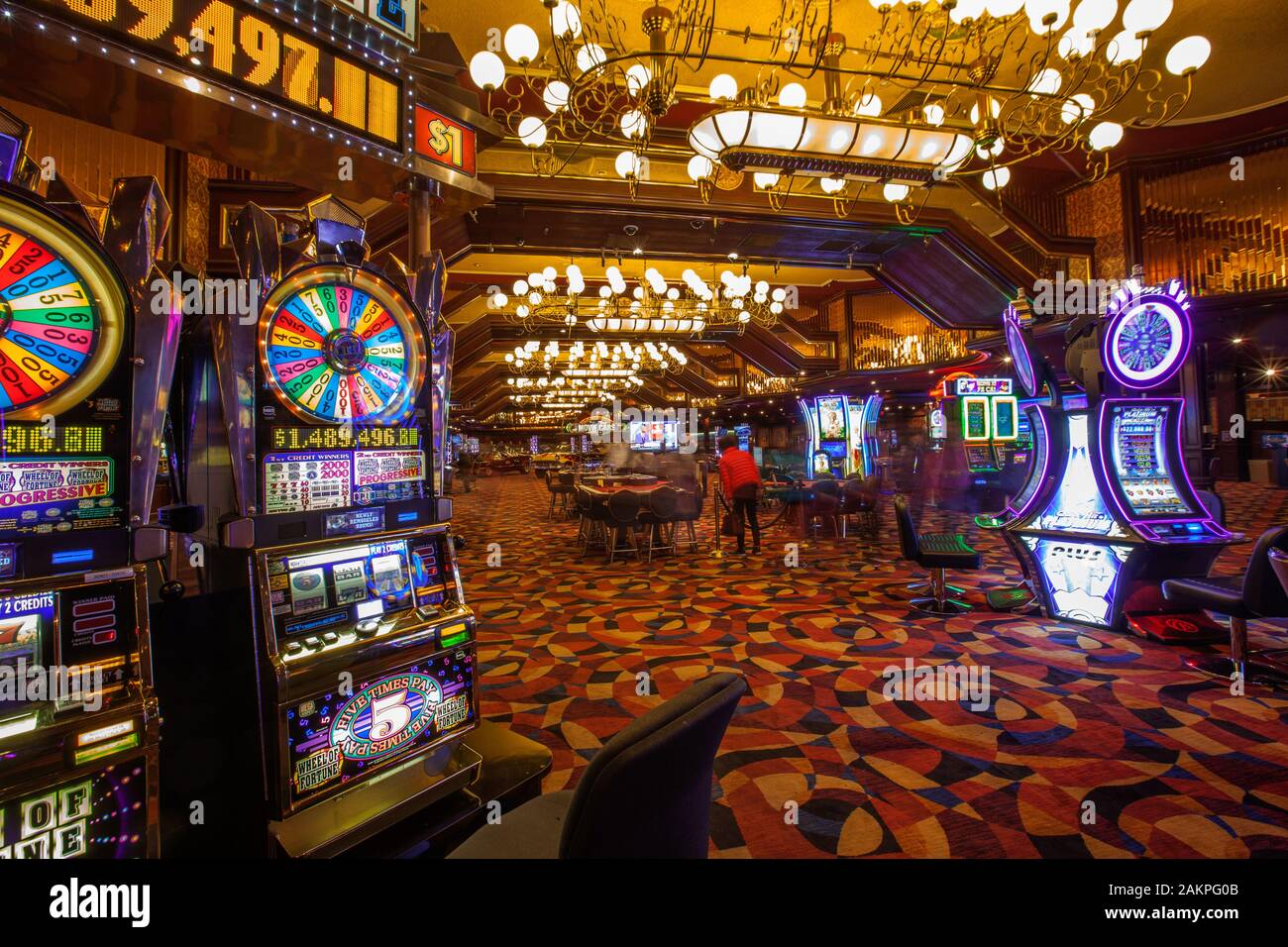
The list we have compiled features free online casinos too. We consider ourselves experts as our international team has been reviewing and testing casinos for over 20 years, playing both online and offline. The list we have compiled features free online casinos too.In addition, our guide helps you learn the rules of popular casino games you’ve always wanted to play — like Blackjack, Roulette, Craps, and Baccarat. You can also use our guide to live dealer sites or find info about UK land-based casinos.
However, owing to a change of thinking and a desire to generate some tax revenue from online operators, the UK decided to take matters into its own hands. Through a combination of tight controls, high quality operators and technological innovation, UK iGaming has always been a leading light in the global industry. The UK’s iGaming industry has always been held up as an example of quality when compared to other gambling jurisdictions. This applies to all online and offline gambling services. Since April 2020, it has been illegal for UK-licensed gambling operators to accept credit card deposits. Ensure the licence is active and covers “remote casino” activities.
Initially, checks will apply to customers depositing over £500 monthly, reduced to £150 by February 2025. The Gambling Commission will introduce financial vulnerability checks for safer gambling. Knowing the legal frameworks in both countries is crucial for operators and players alike to make informed decisions. Understanding these nuances is vital for navigating the complex UK casino landscape. The Gambling Commission, tasked with oversight, ensures gambling practices are fair and transparent, maintaining rigorous standards for compliance.

Conversely, a number of think tanks and campaigners have proposed far more expansive SCV solutions, involving the pooling of every customer’s online and potentially offline play data for analysis by an independent public body which flags concerns and directs operator interventions. As part of the trial, codes of practice are being developed to ensure operators respond appropriately when they are notified of customers in this situation. While supportive in principle, industry initially had concerns regarding potential data protection and privacy implications. For example, a person showing signs or disclosing that their gambling is out of control could have their account closed by one operator doing the right thing to prevent harm, but within minutes they could have a new account with a different operator and a ‘blank slate’.
They argued that the 80/20 rule can mean operators have to oversupply other types of machines in order to meet customer demand for Category B machines and that relaxing the 80/20 rule could lead to a reduction in the number of machines overall. This rule is intended to ensure a balance of machines available for customer use, limiting the number of machines with higher stakes and prizes and allowing larger operators to make commercial decisions on machine availability, rather than relying on fixed limits. For example, operators in certain locations are limited in terms of the number or type of machine category they can offer. Rules on stakes and prizes, and the technical standards for machine games (summarised in Figure 20), serve to protect customers from harm. Some manufacturers described a decline in gaming machine manufacturing in the UK, claiming that a lack of ability to create new games and machines stifles innovation.
Millions of people enjoy gambling every year – whether that be putting money on a horse, playing at a casino, or a bet on the football – and much of this is now done through smartphones. All casinos we recommend are UKGC-licensed and provide deposit limits, reality checks, cool-off periods and self-exclusion. All casino gambling is a negative-expectation activity — treat it as entertainment, not income. Our checks focus on UKGC licensing, bonus terms, payout information, payment options, game libraries, mobile experience and responsible gambling tools. Cross-operator data-sharing so harm indicators follow the player.


Comments are closed